
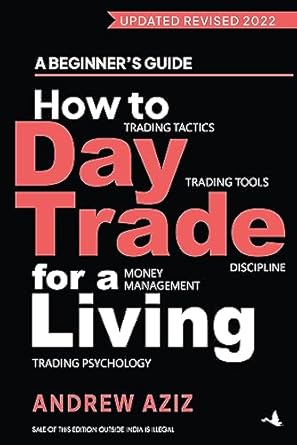
If you’ve ever stared at stock charts wondering how some people make a living from those green and red candles — you’re not alone. How to Day Trade for a Living by Andrew Aziz is one of the most practical and honest books ever written about day trading as a career.
🧩 What the Book Is About
Andrew Aziz wasn’t always a trader. He was a regular corporate professional who lost his job one day — and decided to turn his passion for trading into a full-time career.
Through years of trial, error, and painful lessons, he built a structured approach to trading. This book is his way of helping beginners avoid those early mistakes.
Aziz breaks down everything you need to know before going full-time — from tools and setups to emotional control and risk management.
💡 Key Lessons You’ll Learn from the Book
1. Trading Is a Business, Not a Gamble
The biggest difference between professionals and amateurs? Professionals treat trading like a business — with systems, data, and rules.
You don’t walk into the market hoping to “get lucky.” You plan your trades, manage your risks, and measure performance just like any other business.
2. Start with the Right Tools
You don’t need a fancy setup, but you do need reliable tools. Aziz recommends having:
- A fast, stable computer
- Real-time data feeds (delay kills opportunities)
- A broker with low fees and good execution speed
- A charting platform like DAS Trader or ThinkorSwim
- A trade journal — because reviewing mistakes is how you grow
3. Focus on a Few Reliable Setups
Instead of chasing every stock that moves, Aziz advises mastering a few setups such as:
- Opening Range Breakout (ORB) — trading early momentum after market open
- VWAP Reversal — entering trades near the VWAP level during pullbacks
- Momentum Plays — identifying strong trending stocks with volume
Consistency comes from repetition, not randomness.
4. Risk Management Is Everything
No matter how skilled you are, losses are part of the game. Aziz’s golden rule:
“Never risk more than 1% of your trading capital on a single trade.”
If you trade with ₹1,00,000 — your maximum loss per trade should be ₹1,000. This simple rule protects you from emotional and financial burnout.
5. Use a Favorable Risk-to-Reward Ratio
Don’t take trades where the upside is smaller than the downside. Look for opportunities where you can make 2–3 times more than you risk.
For example, risking ₹1,000 for a potential gain of ₹3,000 gives you a healthy edge.
6. Master Your Emotions
The book spends a lot of time on trading psychology — because that’s where most traders fail.
Aziz explains that your real battle isn’t with the market — it’s with your own emotions:
- Fear makes you sell too early
- Greed makes you overtrade
- Ego stops you from cutting losses
The solution? Create rules that remove emotion from your decisions — and follow them, even when it hurts.
7. Don’t Quit Your Job Yet
Despite the catchy title, Aziz strongly advises against quitting your job to trade right away. He says:
“Don’t go full-time until you’ve been consistently profitable for at least six months.”
Trading should start as a side skill, not a replacement income. Build confidence, test your setups, and only scale up when your results are consistent.
🧭 What You’ll Actually Learn
In simple, practical terms, the book teaches:
- How to read Level 2 data (order flow)
- When to enter and exit trades
- How to set stop losses and targets
- The importance of daily routines (pre-market prep and end-of-day review)
- Why journaling your trades is the fastest way to improve
⚖️ The Honest Truth About Day Trading
Aziz doesn’t sugarcoat it: most people lose money trading. But he also believes that with structure, discipline, and emotional control — anyone can become consistent.
It’s not about predicting the market; it’s about reacting to it with discipline. The moment you stop chasing the thrill and start following your plan — that’s when you start trading like a pro.
🏁 Final Thoughts
How to Day Trade for a Living is not about getting rich overnight — it’s about staying in the game long enough to become good.
If you’re serious about learning how to day trade with structure, this book will save you from the biggest beginner mistakes — emotional trading, overconfidence, and lack of planning.
🔑 Key Takeaway
The goal isn’t to win every trade — it’s to protect your capital long enough to keep learning.