
If you’ve ever followed your trading plan perfectly and still ended up making emotional mistakes — you’re not alone. In Trading in the Zone, Mark Douglas explains why most traders fail even after knowing technical setups. It’s not the strategy that’s the problem — it’s the mindset.
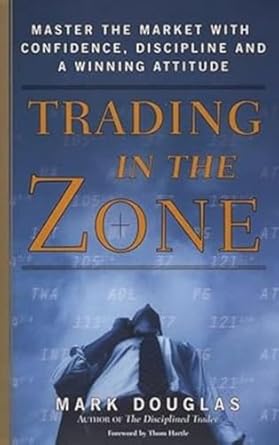
🧠 What the Book Is About
Mark Douglas, one of the most respected trading psychologists, believes that trading success depends more on your mental habits than on your charts or tools.
You can’t control the market — but you can control how you react to it. That’s the real edge professional traders have.
He shows how to shift from needing to be right to thinking in probabilities, just like casinos or insurance companies do. The result? Calm, consistent, rule-based trading.
💡 Key Lessons from Trading in the Zone
1. Think in Probabilities
Every trade has an uncertain outcome. Even perfect setups can fail — and that’s fine.
Pros don’t expect to win every trade; they simply execute their edge over time.
2. Let Go of the Need to Be Right
Traders lose most when they can’t accept being wrong.
Your goal is not to prove anything to the market — it’s to protect capital and follow process.
3. Accept Uncertainty
The market is unpredictable. Once you accept that, you stop forcing trades and start waiting patiently for the right ones.
4. Confidence Comes from Rules
Confidence doesn’t come from luck — it comes from discipline. Have a written plan that defines:
- Entry & exit rules
- Risk per trade
- Profit targets
- Review process
When you follow rules consistently, you build unshakable confidence.
5. Detach Emotion from Results
Don’t celebrate wins too much or mourn losses too deeply.
Every trade is just one sample in a larger series. Consistency comes when you stop connecting self-worth to outcomes.
6. Rewire Your Beliefs About Risk
Douglas explains that many traders fear losses because they link money with emotion.
You must train yourself to see losing trades as costs of doing business, not personal failures.
7. Consistency Is a Mindset
True consistency happens when your thoughts, emotions, and actions are aligned with your trading plan.
Once you stop reacting emotionally, you trade “in the zone” — calm, focused, and disciplined.
⚖️ Why This Book Still Matters
Even two decades after publication, Trading in the Zone remains the go-to book on trading psychology.
It bridges the gap between knowing a strategy and executing it consistently — something every trader struggles with.
If you’ve ever asked, “Why do I keep making the same mistakes?”, this book gives you the real answer.
🏁 Final Thoughts
Trading in the Zone is not about charts — it’s about your mind.
It teaches that the market rewards those who can stay calm under uncertainty and execute without emotional noise.
When you finally stop trying to predict and start managing probabilities, you’ll realize that trading success is less about skill — and more about mental mastery.
🔑 Key Takeaway
The best traders aren’t fearless — they’ve simply learned to accept uncertainty without emotion.